Climate change Grant for Lincoln’s new kitchen
Guest author: Jody Chen (she/her) is a California Climate Action Corps Fellow with the Oakland Parks and Recreation Department, where she mainly supports climate-based programming and stewardship activities at the Rotary Natural Science Center. She is broadly interested in climate resiliency for underserved communities, including food waste recovery, urban greening/green infrastructure development, and climate education efforts.
Amidst plans to expand sports facilities, programming, and community resilience at the upcoming Lincoln Center (to start construction in summer 2026), there includes a new larger commercial kitchen just over 400sf that will further the Center’s current efforts to feed the community. The space will feature refrigerators and an all-electric stove top that wraps around a kitchen island – a significant upgrade from the current 150-square-foot kitchen with smaller refrigeration units and a gas stove top.
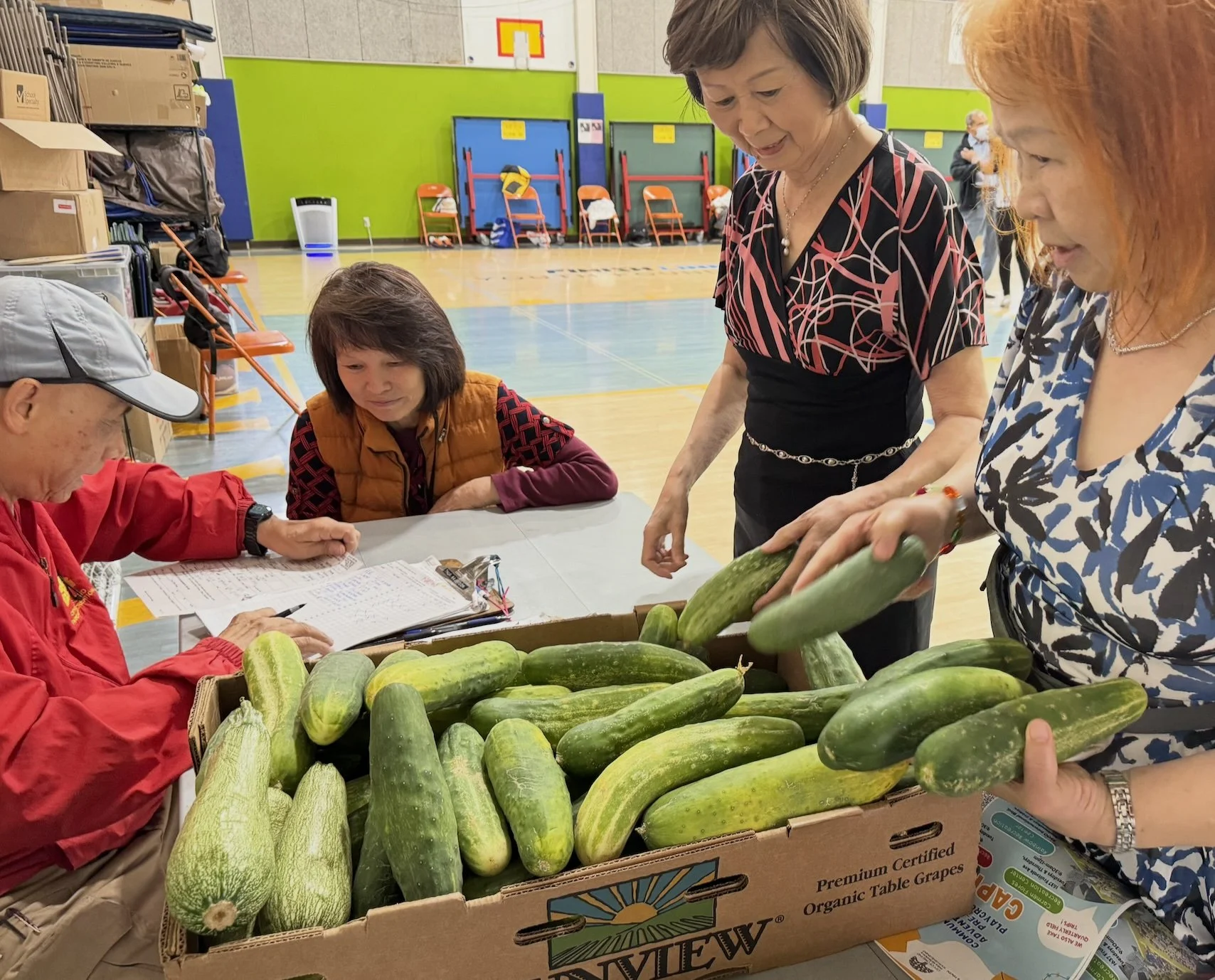
Excess produce from local farms shared with park program participants
Between 500-1000 pounds of food are redistributed per week, according to Lincoln Square Recreation Center Director Gilbert Gong. Through donations from local schools, daycares, and businesses, everything from bread, fruits, and milk is “flipped” locally within 24 hours, offered to the youth and elderly participating in the Center’s wide variety of after-school programs and course offerings.
The new Lincoln Center will have an even greater capacity to collect, store, and repurpose food it receives, thanks to funds from the CalRecycle Local Assistance Grant Program. Jeffrey Wong, a City of Oakland Recycling Program Specialist, played an instrumental role in administering the grant to edible food recovery projects at community and recreation centers including not only the Lincoln Center, but also the West Oakland Senior Center and the Clinton Park Community Center.
At the Lincoln Center, the grant covered costs for electric pizza ovens, rice cookers, and a food dehydrator that were sought by Gong and Quincy Williams, the Capital Improvements Projects Coordinator overseeing project development of the Center.
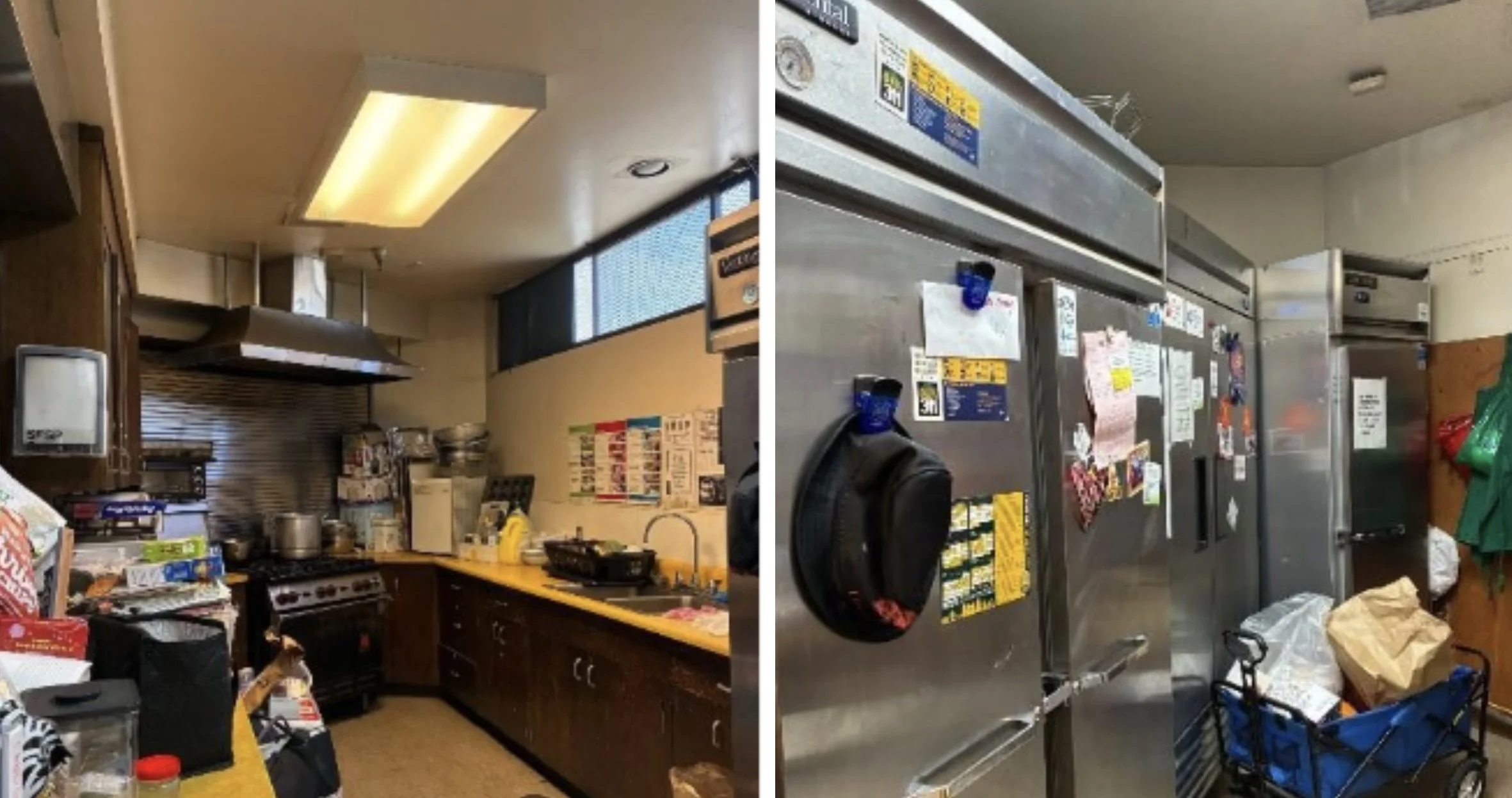
The existing kitchen is too small and crowded to adequately serve the growing community.
The CalRecycle Local Assistance Grant Program provides support for local jurisdictions to implement SB 1383, a state law aiming to reduce methane pollution through diversion of organic waste (food scraps, yard trimmings, cardboard, etc.) from the landfill. Methane is considered the second most important greenhouse gas in the context of global warming. Although it breaks down quickly compared to carbon dioxide, methane traps about 80 times as much heat over a period of 20 years. With organic waste in landfills emitting 20% of California’s methane, the Lincoln Center’s role in recovering leftover food is an important tool to mitigate climate change.
On a local level, the future kitchen has a lot of community-building potential. Gong has stated, “I’d like to see us become a clearinghouse for Chinatown’s unsold goods so that they could be used to support the local community.” Pilot programs like that of a senior lunch program, where most of its raw ingredients are derived from unsold produce, could greatly benefit our local low-income, elderly community by incorporating nutritious, cultural foods prepared by other community members. Thus, the Lincoln Center’s new kitchen can not only bolster resilience in climate-based disasters, but also through community strength and connection.
As Jeffrey Wong has put it, “Food is always a powerful tool to bring people together. By serving these recovered meals to people in need in our community, it makes everyone safer and healthier.”